Clickable links in the description.
Manga Goes to School: Cultivating Engagement and Inclusion in K–12 Settings (AASL Standards–Based Learning Series)
Listen to a podcast with the authors now!
Supporting educators at all levels of manga experience, this resource will help school librarians build stronger collections, create learner-centered programming, and incorporate manga into collaborative teaching.
The appeal of manga is undeniable. As a worldwide publishing phenomenon, it has deservedly garnered the attention of scores of young learners. School librarians are willing and excited to harness its overwhelming popularity, and the benefits are real: with manga, you’ll strengthen not only the circulation statistics in your school library but also engagement and inclusion. This easy-to-use guide will walk you through making it happen. Inside, you’ll discover
- 12 adaptable lesson plans that incorporate the AASL Standards, with additional national and content-specific standards also highlighted to enhance instructional partnerships;
- dedicated information for elementary, middle, and high school librarians;
- an overview of manga basics, such as key genres and publishers;
- advice on collection development, readers’ advisory, and organizing in your space;
- how manga collections and programming connect with and through all six of AASL’s Shared Foundations;
- guidance on ways to integrate manga into your lesson planning, including anime club content that nurtures a feeling of community;
- how manga connects with and through learners from marginalized communities;
- personal librarian stories beautifully illustrated manga-style by both high school learners and co-author Touré; and
- an appendix of manga recommendations sorted by age group and a helpful glossary.
All of My Title Lists
Many lists I’ve compiled over the years using the site Anime Planet.
Manga Genres Signage
The Manga Bible by Helen McCarthy
Renowned literary historian Helen McCarthy delivers the ultimate resource for anyone curious about the past, present, and future of manga. Spanning from 11th-century illustrated scrolls to the billion-dollar industry and global fandoms of today, reader’s explore the origins, narrative and aesthetic evolution, and wide-reaching influence it has had on visual storytelling around the world.
McCarthy explores the medium’s history and controversies, from censorship and subversion in postwar Japan to the rise of science fiction, to the role of erotic manga, and the cultural dynamics of gendered readerships. She also considers manga’s deep connections with film, television, fashion, and music, and introduces both globally recognized artists and lesser-known creators.
Rooted in scholarship yet written with accessibility and energy, McCarthy captures the scope of manga’s artistic innovations, the passion of its global communities, and the forces — both underground and mainstream — that continue to shape its enduring appeal.
- Features hundreds of manga pages, historical prints, vintage covers, and fan ephemera.
- Organized thematically, the book examines major movements, genres, and milestones.
- A dynamic visual companion that is accompanied by incisive yet nuanced analysis.
- Part of a loose series of ‘bibles’ on key subjects published by Prestel.
- A great gift for newcomers to manga and even for dedicated fans.
The Manga Bible presents a comprehensive portrait of manga as one of the world’s most influential and complex storytelling traditions.
The Art of Manga by Nicole Coolidge Rousmaniere
The Art of Manga spotlights—and celebrates—the Japanese comics and graphic novels that are sought after and beloved by millions of readers around the globe. Manga, which refers to comics and cartooning originating in Japan, utilizes a style first developed in the late nineteenth century that draws from Western comics and satire, as well as from Japanese printing and art historical precedents. With its dexterous line drawings, dynamic compositions, intriguing characters, and compelling storytelling, manga is an incredibly accessible and highly enjoyable form of art.
Published to coincide with a groundbreaking exhibition at the de Young in San Francisco, The Art of Manga highlights ten key manga artists with rich sections devoted to their work and texts about their aesthetic themes and working methods. This prismatic volume also features essays and interviews on manga history, creation, and culture by artists, scholars, and industry professionals; manga timelines of its Japanese foundations and its relationship to the United States; and more than two hundred full-color illustrations to give readers a deeper understanding of manga’s cultural development and social impact—and a greater appreciation for its highly creative and mesmeric power.
The Graphic Library
Special emphasis placed on education collection development due to reviewers’ background and experience.
Manga in the Middle
Julia Stivers: Manga in Your Library is Non-Negotiable.
What do I mean by that? Simple. If we’re not collecting manga, we are not building an equity-driven space guided by student interests. Full stop.
Manga is necessary for a BIPOC-sustaining, Queer-affirming, disability-positive, mental health sensitive school space.
I started this site because collecting manga for middle school can be tricky! I want to help us all grow vibrant manga collections and programs to support our wonderful students.
No Flying No Tights
I currently work as the Head of Reference and Programming at the Woburn Public Library after 18 years as a teen librarian at the Brookline Public Library in Brookline, Massachusetts. I am also one resident comics and graphic novel enthusiast. Over 25+ years of working in libraries, I’ve had a lot of informal questions from and discussions with my peers about graphic novels and comics. This site started as a place for me to share my expertise with whoever is curious and hopefully provide some clarification about what comics and graphic novels are. Now, the site boasts over 40 staff members including dedicated reviewers and editors, all of who work in libraries and are volunteers. This site couldn’t exist today without the enthusiasm and dedication to comics that everyone here exemplifies.
Light Novels: A Natural Extension of Your Manga Collection (written by me for Knowledge Quest Blog)
I’ve noticed that Knowledge Quest deletes columns as they hit the 5 year mark. So, I’m posting full columns here as resources.
A light novel (ライトノベル) is a type of young adult novel in Japan that targets middle and high school students. Light novels are an interesting format, often packaged with manga illustrations. They are published at a fast and steady pace. Oftentimes light novels are adapted into manga and anime. While they aren’t quite as popular in the United States as manga, they have a fervent and devoted audience.
My big selling point for light novels is often that they serve as a bridge text for manga readers to prose… but that’s honestly my attempt to appease picky teachers who still resist graphics. The honest truth is that I think light novels have their own independent value.
What Light Novels Offer
Light novels are written at a fast pace, with high drama and action. This is due to their serialized nature. Light novels in Japan are sometimes published monthly, or chapters are published like manga chapters in anthologies. Many popular manga and anime started as light novels: Sword Art Online, That Time I Got Reincarnated as a Slime, and the Haruhi Suzumiya series.
Right now, the biggest genre in light novels is isekai (異世界), a genre that revolves around the main character being transported from the modern world to some other world. However, not all light novels are isekai. The classic light novel series Full Metal Panic is a mecha adventure story, and high school romantic comedies such as Bottom-Tier Character Tomozaki are rooted in a realistic setting.
What’s really interesting about light novels is how easy they are to read. The pace is generally fast. The characters are often very compelling. A popular trope is for the protagonist to be reincarnated into the role of a villain of a video game or novel and have to avoid “doom flags” by changing the story or themselves. And throughout the story are illustrations, serving as additional treats for the reader.
For our students, part of the appeal is the depth they get into the story. Light novels are sometimes capable of deeper world building and introspection than manga or anime. Also, the light novels often are well past the point of the manga or anime, so it’s a faster way to get the full story.
But… Are They Appropriate?!
Here’s the thing with light novels. Sometimes, the cover is a little bit sexy, depending on the series. This is fan service and is not really reflective of the content. Oftentimes, the content is much more chaste than most of what you probably have in your general fiction section. That being said, just like with all things, use some common sense. The publishers do offer age ratings. And the titles of texts are often very specific when they are actually explicit. JK Haru Is a Sex Worker in Another World is not going to be a good selection for a school library. (That being said, this work is a deconstruction of the format and is a critique of misogyny in both Japanese culture and in the fantasy settings typical of light novels. I recommend it for adults.) There are reviews available, too.
Some Titles to Get You Started
The following are light novels that I know are available in print. Because of the target audience in Japan, these texts are middle school and up.

Bottom-Tier Character Tomozaki by Yuki Yaku, Illustrated by Fly. Published by Yen On.
Tomozaki is the top gamer in Japan, but there’s one game he doesn’t find worthwhile–the game of life. As far as he’s concerned, the stats are stacked against him! That is until a meeting with the number two gamer in Japan has him questioning everything.

My Next Life as a Villainess: All Routes Lead to Doom! by Satoru Yamaguchi, Illustrated by Nami Hidaka. Published by J-Novel Club.
A bump on the head is all it takes for Katarina Claes to suddenly remember her past life as an otome game (dating sim)-loving girl who played a game called Fortune Lover…with a villainess named Katarina Claes who meets a number of nasty ends! It’s up to this plucky protagonist to avoid her doom flags in this high comedy story.

The White Cat’s Revenge as Plotted from the Dragon King’s Lap by Kureha, Illustrated by Yamigo. Published by J-Novel Club.
Stranded in another world, Ruri makes use of an enchanted bracelet to disguise herself as a white cat. Through a series of events, she winds up the companion of the Dragon King. A delightful comedy of errors and magic.

I’m in Love with the Villainess by Inori, Illustrated by Hinagata. Published by Seven Seas.
Rei, an office worker, wakes up in her favorite otome game, but she has absolutely no intention of romancing any of the boys! Rei is determined to win the heart of her favorite character, villainess Claire Francois. An LGBTQ+ twist on a familiar trope that has surprising depth and heart.
Manhwa & Webtoons: The Graphic Craze That’s Already Happening
(written by me for Knowledge Quest Blog)
There’s something your students are reading with intensity on their phones and computers, and it could very easily slip past you. It’s the manhwa and webtoons. We’re right on the precipice of these titles becoming a frequent request in libraries.
You may have already gotten requests for Solo Leveling. This is a smash-hit series about a young man who acquires incredible power after an accident. Or perhaps you’ve heard about Lore Olympus, the stylized and romantic take on the myth of Hades and Persephone.
What Are Manhwa & Webtoons?
Manhwa and webtoons are, ostensibly, the same thing. They are comics. But not all manhwa are webtoons, and not all webtoons are manhwa. Manhwa is the Korean word for comics, so it’s the term used for comics created by Korean creators. Webtoon is simply the term for a comic that originates online and is produced in an optimized format for online viewing. Specifically, webtoons are optimized for smartphones. Chapters are long scrolling and are not commonly broken into pages. Webtoons often will have music composed to accompany key chapters. A favorite manhwa of mine, Whale Star: The Gyeongseong Mermaid by Na Yoonhee, uses this to significant effect.
Popular manhwa and webtoons are full color and are primarily illustrated using digital methods. The publishing schedules are intense, often with a weekly output of chapters. It’s not uncommon for creators to take hiatuses in-between “seasons” to avoid health issues and burnout.
Korean creators dominate this art form, primarily because of the strength of smartphone culture in Korea. Also, Korea is the home of Samsung, which has an enormous impact on the technology culture in the country. Media consumption is widely done on smartphones.
That said, webtoons are an international medium. The most popular webtoon remains Lore Olympus by Rachel Smythe, who is based out of New Zealand. There are also webtoons based on the YA novels The Wrath & the Dawn and Not Even Bones.
How Manhwa is Different from Manga
It is important to remember that manhwa is not manga. There are similarities in style, but there are cultural differences. There are often Japanese antagonists in much of Korean media. Korea and Japan have a tense history, with Japan having perpetuated many human rights violations (This is the entire conflict of Whale Star). Conflating the two is disrespectful, and it is vital to remember this.
Popular manhwa is full color, read from left to right, and is rarely turned into anime. There are black and white manhwa, but they are older titles or more avant-garde.
The most popular manhwa is primarily targeting young women and LGBTQ+ audiences. Romance is the most popular genre, and popular manhwa gets turned into television series regularly. Action manhwa does have its audience, and it can get extremely popular, but romance is where the money is because reading manhwa is an expensive habit.
Manhwa is primarily read on apps, which have coin-based systems to read. You can wait to read for free for some titles, but it’s not every title.
This is why, as many manhwa are making the jump to print, we need to start offering them in our libraries!
Manhwa & Webtoons Available in Print or Coming Soon
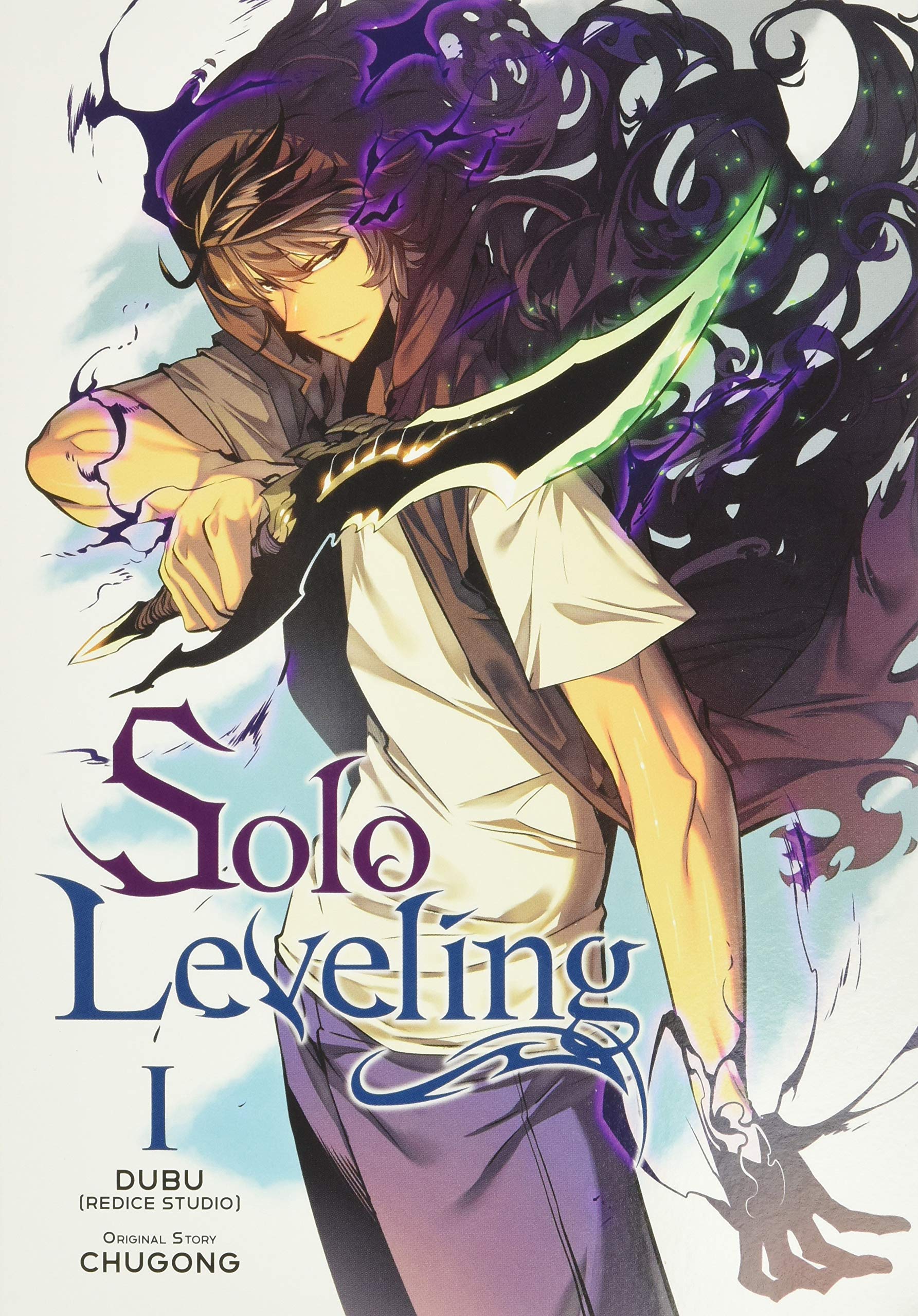
Solo Leveling by Dubu (Original Story by Chugong). Published by Yen Press. Jinwoo is the Weakest Hunter of All Mankind, but with his family in need, he has no choice but to risk his life hunting. And one day, that risk seems to bring him to the end of the line… until he’s given a new chance and a new and unheard-of power!
The Abandoned Empress by Ina (Original Story by Yuna). Published by Yen Press. Aristia’s first life ended in tragedy. This time, she will not allow anyone- even a god- to dictate her fate. Aristia carves out a new future for herself with a new name and determination.
Why Raeliana Ended Up at the Duke’s Mansion by Milcha Whale. Published by Yen Press. Eunha Park was pushed off a roof, only to wind up as the doomed victim in a murder mystery. Refusing to succumb to such a fate, she turns the entire story upside down!
The Beginning After the End by TurtleMe, Fuyuki23, issatsu. Published by Yen Press. King Grey died a great and renowned king but was also incredibly lonely. This time around, he wants to live life to the fullest! But a dark evil may prevent all he’s worked for.
(You may notice one publisher dominating this list. Yen Press is by far the leader in bringing manhwa to print. Other publishers are starting to get into this format, but Yen Press is ahead of the curve.)
Four New Manga Titles to Add to Your 2022-23 Purchase Lists (written by me for Knowledge Quest Blog)
There are a plethora of great manga titles being licensed nowadays, and keeping track can sometimes be daunting. Here are four recent and upcoming titles you won’t want to miss!

Cat + Gamer
Mangaka: Wataru Nadatani
Translator: Zack Davisson
US Publisher: Dark Horse
Age Relevance: Upper Elementary to Adult
Volume One Release Date: May 24, 2022
When an office lady who is secretly a hardcore gamer brings home a stray cat, adorable hijinks ensue!
What makes Cat + Gamer such an appealing title is the blend of cat and gamer content. Students who love animal manga will delight in Nadatani’s illustrations of Musubi, while gamers will be impressed by the thorough knowledge of video games. The story is fairly simple, as the main character, Riko, learns how to raise a cat while enjoying her games. Part of the fun is how Riko tends to think in gamer terms about everything, including Musubi. It’s an utterly delightful romp that’s bound to be a hit!

Summertime Rendering
Mangaka: Yasuki Tanaka
Translator: Jocelyne Allen
US Publisher: Udon Entertainment
Age Relevance: High School to Adult
Volume One Release Date: June 1, 2022 (Paperback), Early July (Hardcover)
Shinpei returns home for the funeral of his childhood friend but finds himself caught in a time loop that has consequences for the entire world.
The manga that inspired Disney+’s new anime, Summertime Rendering is a haunting time loop manga with elements of horror. This manga is a perfect bridge for fans of series such Erased, Parasyte, or Tokyo Revengers. The series deftly handles horror and thriller tones, while also balancing the melancholy of loss. Shinpei’s struggle to understand what truly happened to Ushio and what is happening to his home makes for a gripping tale. The collecting of this series into omnibus hardcover editions also means longevity on library shelves!

Lost Lad London
Mangaka: Shima Shinya
Translator: Eleanor Ruth Summers
US Publisher: Yen Press
Age Relevance: Middle School to Adult
Volume One Release Date: May 24, 2022
Al Adley has no idea how the bloody knife got in his pocket after he took the London Underground home at the same time the mayor of London was fatally stabbed in a train car, but he’s found an unlikely ally in Detective Ellis, who believes his innocence.
Both Japan and Great Britain have a long history and reverence for the mystery genre, and this gorgeously illustrated series brings to the forefront that interplay. There’s a great deal of tension in this series, and the mystery is gripping. Setting the story in London means we get protagonists normally not seen in manga: Al is South Asian, while Ellis is Black. And Shinya writes with a lot of understanding of the culture and feel of the setting, making this a truly unique manga. The enthralling mystery and fascinating characters are sure to grab students’ interests.

Shuna’s Journey
Mangaka: Hayao Miyazaki
Translator: Alex Dudok de Wit
US Publisher: First Second
Age Relevance: Elementary to Adult
Volume One Release Date: November 1, 2022
Shuna, a prince of a famine-stricken land, sets out to find the golden grain to potentially help his people.
This story was originally published in Japan in 1983, and in it, you can see the roots of all of Miyazaki’s work at Studio Ghibli. Miyazaki originally wanted Shuna’s Journey to be a film but was told that such a simple story wasn’t suitable for animation. Instead, he was supported by several Japanese publishers to make this manga.
Shuna’s Journey is gorgeous, with lush watercolor illustrations and a story about strength, hope, and love. It is ultimately a simple story about a boy, on a journey to help his people, who meets a girl whose own strength winds up being his real salvation. Shuna’s Journey will be published as a single hardcover volume, and it’s a book you’ll want on your shelves.
Favorite Character Brainstorm
VIZ
The largest publisher of manga (and all graphics) in North America.
MANGA Plus
Free and legal site from Japanese publisher Shueisha to read manga online.
Yen Press/ Ize Press
Square Enix Manga
Star Fruit Books
Star Fruit was a small press run by Matt Hasch. Matt was an educator and a friend, who was tremendously engaged from the start of his publishing journey about getting manga into the hands of readers.
Books licensed by Star Fruit are now in the care of Glacier Bay. Please support their work.
Glacier Bay Books
Takumigraphics
Takumi comes from the Japanese kanji meaning “excellence,” skillfulness,” “ingeniousness,” as applied to a craftsperson. This character exemplifies the aesthetic caliber of the books that will comprise this imprint — works of mastery and vision. Our logo is inspired by the seals used by Japanese and Chinese craftspeople to mark their work.
The Takumigraphics imprint encompasses comics from across East Asia, including Japan, Korea, China, Singapore, and Taiwan. While this scope represents a wide range of nuanced cultures and backgrounds, comics from these countries often share an aesthetic and visual language that we believe readers will recognize and appreciate.
J-Novel Club
J-Novel Club is a digital publishing company officially licensing and translating light novel and manga titles for a community of readers.
Kodansha
UDON Entertainment
CBLDF: Criminal Prosecutions of Manga
CBLDF: Manga Book Club Handbook
Download a PDF of the Manga Book Club Handbook here.
Hardcopies of the Manga Book Club Handbook are available in the CBLDF Rewards Zone here.
Manga Belongs in School Libraries (written by me for Knowledge Quest Blog)
I have a dedicated group of readers who come and see me three times a day to check out books. They’re there first thing in the morning, at lunch, and at the end of the day. Thanks to them, my circulations this year are through the roof after only a month. They check out multiple books at a time, they talk to me at length about character motivation, themes, tropes, and creators. I am, of course, talking about my manga readers.

The manga shelf in our library, currently empty of about half of its normal content.
I came into my library four years ago knowing manga and graphic novels would be a major component of my library, because I happen to love manga. When I read for my own enjoyment, it’s manga that I read. I love traditional books, but the combination of artistry and literary prowess that an excellent manga novel provides is something particularly enthralling to me. I know that my students who read manga and graphic novels demonstrated exceptional reading and writing skills. They have gone on to success in various fields. They demonstrate a higher likelihood of continuing on to be lifelong readers.
Other school librarians who have manga collections tell me the same things: their circulation statistics are up, their students are in the library more frequently, and reading as a whole is on the rise. Despite the results many of us report in our libraries, many school librarians are resistant to providing manga to their students. I believe this is often the result of stereotypes about the medium.
Stereotypes and Reality
The stereotypes are that manga is violent, filled with demeaning depictions of women, and is in some way deviant. These stereotypes are dated and xenophobic. While this may be true of some manga, it is also true of representations from every other form of literary expression. There are American novels and graphic novels that contain these elements. What we as school librarians need to do is make good collection development decisions so that we are selecting appropriate material, just as we do with any other medium that we select.
Also, the reality of manga today is that we have never seen more of a diversity of titles being published! There are amazing stories that center a variety of experiences. There are LGBTQ+ titles such as Boys Run the Riot (Kodansha USA) and I Think Our Son Is Gay (Square Enix Manga), and forthcoming titles about neurodivergence, such as My Brain Is Different: Stories of ADHD and Other Developmental Disorders (Seven Seas Entertainment). And longtime favorites such as Ouran High School Host Club (VIZ Media) and Fruits Basket (Yen Press) are free of fanservice and center themes such as friendship, identity, and moving past generational trauma.

The Japanese cover for the forthcoming My Brain is Different: Stories of ADHD and Other Developmental Disorders, from Seven Seas Entertainment.
But Where Do I Start?
Start small! My recommendations for a school librarian just building a manga library are:
- Start with the first three of highly requested series. Consider purchasing multiple volume ones. Many of your readers may be starting their manga journey with you!
- Consult students who love manga. But, also be sure to research yourself! Resources include:
- No Flying No Tights: Review site focused on providing guidance to educators.
- The Graphic Library: School librarian Sara Smith reviews comics and manga with depth and clarity with an outlook toward collection development.
- You can find further resources, including book lists, at my own blog, Manga Librarian.
- Seek out professional development!
- Read manga yourself! Manga is a wonderfully diverse medium with so many stories. And the stories that are popular with our students may not appeal to you personally. You may prefer stories like Magus of the Library (Kodansha USA), the story of a young boy whose passion is books, who is inspired by a group of amazing librarians to become a librarian himself!
“I Like This School Now!”
Such were the words of one of my students the first week of school this year upon seeing our manga section. When students are asking for books, it’s an opportunity to welcome them into the school library! For students who love manga, it is a part of their identity, and having manga validates them. They feel seen, they feel welcomed. And that, more than anything, should make a school librarian excited to bring manga into the library.
Putting Your Graphic Novels On Vacation Is Censorship (written by me for Knowledge Quest Blog)
A trend has developed among school librarians which we need to question and firmly eradicate. It is the trend of putting the graphic novel section or popular series on “vacation” to eliminate student choice. The books targeted have a graphic component. Usually it’s Diary of a Wimpy Kid, Dog Man, or sometimes the entire graphic novel section. The reasons given are usually either a frustration with students reading the same books repeatedly or with the “messiness” of the graphic novel section from frequent use.
In a time when school librarians are facing constant challenges from political factions, this is not what I expected to hear from my colleagues. Privileging certain types of reading or punishing students for our own struggles with management and organization hurts students. Graphic novels provide students with comfort and joy. Visual literacy is an important skill. Books with humor are not lesser than books with tough topics. You cannot wear a t-shirt that says “I Read Banned Books” one day, then hide an entire format the next.
Prohibiting the reading of graphic formats targets neurodivergent students (I invite you to read this piece from Ellen Walker for a student perspective). Studies show that students with autism, dyslexia, ADHD, and other forms of neurodivergence comprehend visual formats more completely. It also rejects student choice, and can create an unwelcoming environment in your library. To readers who prefer visual formats, you are sending the message, “You are not valued as a reader” when you eliminate their preferred format.
We are facing unprecedented challenges as a field. Why are some of our colleagues choosing to self-censor because of their own internal prejudices about literary merit or inconvenience? Have they considered what this may look like to their colleagues who are fighting to keep books on the shelf?
If You Really Are Struggling to Manage Your Graphic Novel Section
If this really is a matter of you not knowing how to handle your graphics section because the section is messy or unkempt, here is some advice:
Get students involved in the maintenance of your school library.
Seriously. They will gladly help, and if they are passionate about the format, they will enjoy doing it. I have three students alone who handle our manga section. I have a comics enthusiast who is in charge of the comics section and putting it in order. Additionally, our western graphics that circulate a ton actually rarely go onto the assigned shelf. The books go onto our long display shelves where they are snatched within ten minutes.

Our manga section after a recent re-organization to add more shelves. Students lead on this section.
To be completely honest, many graphics aren’t designed for library circulation. Children’s graphics in particular tend to be thin paperbacks with glossy covers. The colored ink in the pages of graphic novels makes them heavy, and prone to falling over. Pair that with student excitement, and there will be mess from time to time. Also, student involvement in the school library will help. It will ease your time spent cleaning. Also, in my experience, student workers tend to educate other students about keeping the space neat. I’ve heard my aides tell other students, “Oh, no, don’t put it like that!” or show them where to find things. This student ownership of the space brings a lot of joy… and works to keep sections from getting out of hand.

Our forward facing shelves. Pictured is a student-made display of their recommended superhero comics, but the other side has our most circulated graphic novels on rotation as they come and go.
Book Vacations Are Never a Solution
The solution should never be to shut down a section. Remember that some students need those books for comfort and reliability. Also, others may need them just because they like them. It shouldn’t matter what purpose students have for reading. What matters most is that we are not actively working against student joy in reading. No matter how cute your sign is, this is a harmful practice. If you have sent books on vacation, please don’t do it again. If you have the compulsion to do it in the future, sit down with yourself and ask, seriously, where it’s coming from. Could you look a graphic novel artist or author in the eye and tell them with full conviction that their books need to be kept from the children they created those books for?
Because I don’t think I could ever do that, especially right now.
Journal of Anime and Manga Studies
The use of “anime” as a descriptor in all principles includes manga, cosplay, and its fandoms.
Yatta-Tachi
Of special note to librarians: Yatta-Tachi runs the most comprehensive list of new releases every month, and they note whether those releases are print or digital. This is an essential resource!
Okazu
School Librarians United: Manga Librarian
The episode I did for Amy Hermon’s podcast, School Librarians United.

